


 PLA PRO MARBLE
 PLA PRO GLOW IN DARK
 PLA PRO WOOD
 PLA+ PACK 10 SPOOLS
 PLA+ PACK 5 SPOOLS


Types of 3D Printer Filaments

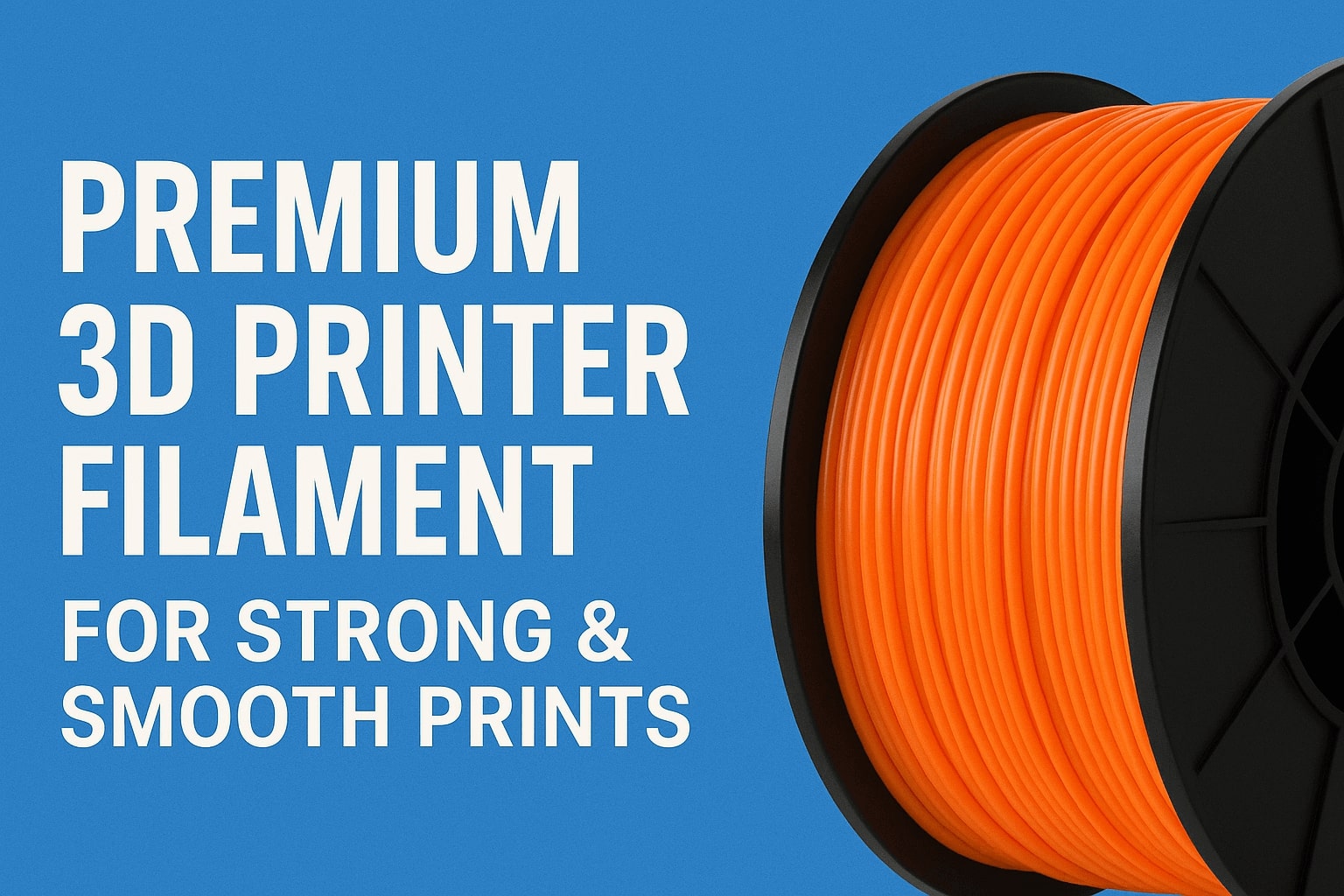
Discover the Right 3D Printer Filament for Every Project
When it comes to 3D printing, the filament you choose can make the difference between a beautiful, strong print and a frustrating failure. As makers, designers, or engineers, you deserve filament that matches your vision — whether you print a detailed model, functional part, or flexible prototype. At AlmightyFila, we offer a wide range of high-quality 3D printer filament so you can always pick the right material for the job.
What Is 3D Printer Filament — and Why It Matters
3D printer filament is essentially the building block of FDM/FFF 3D printing. It’s a thermoplastic material wound onto a spool, loaded into your printer, melted, and deposited layer by layer to build up your object.
Common Filament Types and Their Best Uses
Here’s a breakdown of popular filament types, what they’re good for, and when you might want to use them.
PLA — Easy, Eco-Friendly & Beginner-Friendly
Polylactic Acid (PLA) is one of the most widely used 3D printer filaments. It comes from renewable resources, such as starch or sugar-based biomass, making it more eco-friendly than many plastics.

Because it melts at lower temperatures and generally does not require a heated bed, PLA is easy to print — making it ideal for beginners or casual printing.
Use PLA when you want:
- Prototypes, models, decorative parts, toys or educational prints.
- Clean surface finish and fine detail.
- Low-cost, low-effort printing without complex setup.
Trade-offs: PLA is less heat-resistant and mechanically robust compared to more technical filaments.
ABS — Tough, Durable, and Functional
For parts that demand durability, impact resistance, or heat resistance, ABS (Acrylonitrile Butadiene Styrene) becomes a solid choice. It offers stronger mechanical properties and better thermal stability than PLA.
However, printing ABS usually requires a heated bed (and sometimes an enclosure) to reduce warping, and good ventilation is needed because ABS can emit fumes during printing.
ABS works well for functional parts such as housings, enclosures, mechanical components, and any print that must endure stress, heat or repeated use.
PETG — Balanced Strength, Durability and Ease
If you want a filament that sits between PLA and ABS — offering better strength and durability than PLA but with easier print-ability than ABS — PETG is often the go-to. PETG (Polyethylene Terephthalate Glycol) brings together an appealing mix: good chemical resistance, impact resistance, durability, and relatively easy printing.
PETG is ideal for mechanical parts, containers, functional prototypes, or any object that needs to resist moisture, chemicals or regular stress. It tends to warp less than ABS and prints more reliably.
Nylon — Strong, Flexible, and Built for Stress
When you need strength, toughness, and flexibility — especially for mechanical parts under load — nylon filament delivers. It’s often used for gears, hinges, functional prototypes, and parts that must endure repeated stress or friction.
Nylon also resists chemical and environmental wear, which makes it suitable for demanding applications. But printing with nylon can be more challenging: it often requires high temperatures and needs careful handling because Nylon absorbs moisture from air.
Flexible Filaments (TPU / TPE) — For Soft, Elastic, and Wearable Prints
For flexible, rubber-like prints — such as phone covers, gaskets, wearable parts, or any design needing softness and elasticity — flexible filaments like TPU filament (Thermoplastic Polyurethane) or TPE (Thermoplastic Elastomer) are perfect. They bring elasticity, impact resistance, and durability.
Because of their elastic nature, flexible filaments are trickier to print. They often require slower printing speed, careful tuning, and sometimes specialized extruders.
Use flexible filament when you want prints that can bend, compress or absorb shock — not rigid models.
Advanced & Special Filaments — For High-Performance or Specialized Needs
Beyond the standard materials, there are specially filaments that combine base plastics with additives like Carbon Fiber filament, or use high-performance resins like poly-carbonate filament. These filaments can add strength, stiffness, heat resistance or special surface finishes, enabling applications in industrial parts, automotive, aerospace, or just high-quality prototypes.
If your work requires more than basic specs — like structural components, functional prototypes under stress, or weather-resistant parts — exploring these specially filament options can be highly worthwhile.
You want to more visible your business in google, Contact Woocommerce SEO & Marketing Agency For long term growth
How to Choose the Right Filament for Your Project
Selecting the perfect filament depends on two things: what you want to print, and how you want it to perform. Here’s a quick guideline:
- Detailed models, toys, prototypes or decorative parts: Choose PLA filament for ease and clean finish.
- Functional parts needing strength, wear resistance, or moderate heat resistance: ABS filament or PETG filament are reliable.
- Mechanical parts under stress or load (gears, brackets, functional components): Nylon filament is often best.
- Soft, flexible, wearable, or shock-absorbing designs: Use TPU or other flexible filament.
- High-performance, industrial-grade parts, or parts requiring stiffness/heat resistance: Try specialty or composite filaments.
Also consider your 3D printer’s capabilities (heated bed, max nozzle temperature, extrusion system) — because not all printers handle every filament equally well.
Explore Filament Possibilities — Make Your Prints Count
3D printing is more than a hobby — it’s a creative and technical process that demands materials suited to the job. When you align the right filament with your project goals and printer setup, you unlock the power to create strong, beautiful, and functional prints.
At [Your Company Name], we’re here to support your creativity and precision. Choose the right filament — and make every print a success.


